Brent Health Matters (BHM) is a partnership across stakeholders in Brent (NW London) that aims to tackle health inequalities through community engagement and outreach. The programme launched in September 2020, following the first wave of Covid-19, when longstanding inequalities within the borough became more visible.
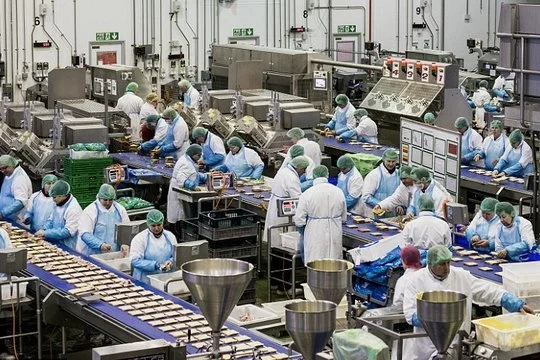
One of BHM’s priorities is improving access to health and care services. This is delivered through in-reach and community health and wellbeing events. At the time of my research, BHM had delivered 202 events and 8,459 health checks, including three night-time events at food factories, reaching 426 nightshift workers.
These checks revealed poorer health outcomes among nightshift workers compared to non-nightshift workers. Fourteen per cent had undiagnosed high blood pressure (compared to 8%), and 12% had abnormal atrial fibrillation (compared to 4%). In addition, 21% had a BMI over 30, compared to 15% of day-shift workers.
Researching Nightshifts
Between 2023 and 2024, I visited a local food factory to speak with 25 factory workers before their shifts or during breaks. Conversations and survey responses helped identify key findings and potential recommendations for the local health and care system. Several common factors were revealed that may contribute to these outcomes. Many workers juggle multiple jobs, English is often not their first language, and many are recent migrants. Some are not registered with a GP and are unsure what health and care services they are entitled to. My quality improvement project, delivered through a fellowship with the National Institute for Health and Care Research (NIHR), focused on engagement with nightshift workers to identify opportunities to improve access to services.
Food Matters
Workers reacted positively to my opening question: ‘Which of the following are most important to you?’ They ranked eight themes from most to least important. Health ranked highest, with one respondent stating, ‘health comes first!’. Food ranked fourth, above environment, money, housing and work, and below sleep, family and friends.
During meal breaks, most workers brought home-cooked food in tinned boxes, often traditional dishes from their countries of origin, such as Goan fish curry with rice. This was observed despite the availability of subsidised packaged food at work.
While these choices reflect positive food practices during shifts, night work itself appears to create constraints on when, how, and what workers consume outside of work. Fatigue, unsociable hours, and limited access to affordable, healthy food in the early morning all shape food behaviours beyond the workplace.
Several workers described consuming alcohol after shifts to help them keep warm and fall asleep when arriving home around 4:30am:
‘I drink a little bit every day when I reach home to keep warm because I find it cold in the UK’.
‘I drink a little every day for one hour once I reach home after work at 4:30am.’.
Additionally, 20% of respondents wanted more information on managing money and debt. Although most workers brought home-cooked meals to work, concerns about finances point to a more hidden form of food insecurity — shaped less by hunger and more by financial insecurity, constrained choice, and the pressures of shift work.
These patterns — disrupted sleep, alcohol use to manage cold and rest, and constrained food availability — sit alongside the higher rates of undiagnosed hypertension, atrial fibrillation, and obesity observed among nightshift workers. This suggests that poorer health outcomes are shaped by working conditions as much as individual behaviour.
Complex Pressures; Mixed Outcomes
This small-scale study highlights a complex relationship between food, work and health for nightshift food factory workers. On one hand, workers prioritised health and demonstrated positive food choices by bringing home-cooked meals, despite the availability of subsidised processed food at work. Food was also ranked as more important than housing, money, and work itself.
However, financial insecurity, alcohol use, and the structural constraints of nightshift work complicate this picture. As the research did not capture food choices outside work, it does not provide a full account of workers’ diets or food access.
Given the poorer cardiovascular and BMI outcomes observed among nightshift workers compared to day-shift workers, further exploration of the links between shift work, food insecurity, and health is needed. Tackling food-related health inequalities for nightshift food workers requires moving beyond access to subsidised food, and addressing the wider realities of shift work, financial insecurity, and barriers to rest, warmth and wellbeing.