
Hunger at Work, Hunger in Place: What Our Research Reveals About Food Insecurity in Britain

Drawing on extensive survey data from over 14,000 low-income households across England and Scotland, Dr Megan Blake and her research team found that for a growing number of UK households, food insecurity is not a series of isolated emergencies, but a state of structural precarity that systematically erodes financial, social, and psychological wellbeing..
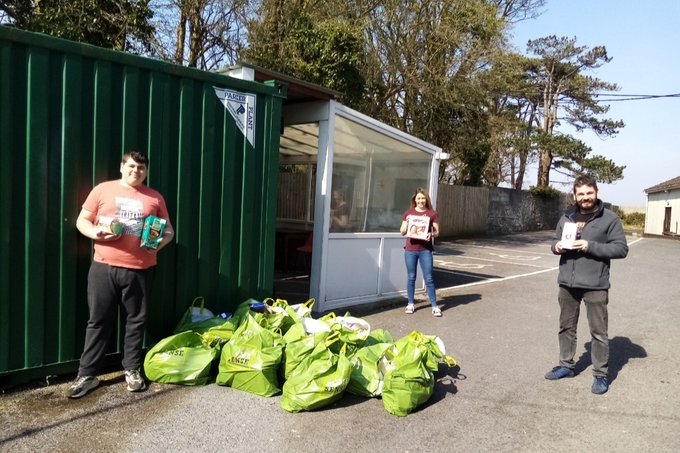
‘What emerged was not simply a story about unemployment or acute crisis. Instead, the research points to a much broader landscape of structural precarity in which many working households are struggling to absorb rising costs, unstable infrastructures, and the gradual erosion of financial resilience. Importantly, the issue is not confined to cities’.


Structural Precarity

When we talk about food insecurity in the UK, the public imagination often turns toward extreme poverty or emergency crisis. But one of the clearest findings from our recent research is that hunger increasingly sits much closer to ordinary working life than many people realise. Our study, Building Resilience: The Role of Food Clubs in UK Food Security, surveyed more than 14,000 lower-income households across England and Scotland to better understand the realities of food insecurity and the role community food infrastructures can play in supporting resilience.

What emerged was not simply a story about unemployment or acute crisis. Instead, the research points to a much broader landscape of structural precarity in which many working households are struggling to absorb rising costs, unstable infrastructures, and the gradual erosion of financial resilience. Importantly, the issue is not confined to cities.

Recent coverage in the Guardian highlighted one of the study’s most striking findings: rural Britain is increasingly becoming a “food desert” for many lower-income households. While food deserts are often imagined as an urban problem, our findings suggest that geography itself is becoming an increasingly important driver of food insecurity. More than half of lower-income rural households in the study lived over twenty minutes’ walk from a shop selling fresh fruit and vegetables, compared with just 6.8% of respondents in the most deprived urban neighbourhoods. The paradox is stark: some of the regions central to Britain’s food production are simultaneously becoming places where affordable, healthy food is hardest to access. And this matters enormously for working households.

In-Work Poverty

The dominant narrative around food insecurity still tends to assume that employment protects people from hardship. Yet our research challenges this assumption directly. While households reliant solely on benefits experienced the highest rates of food insecurity, substantial levels of insecurity also existed among people in work. Many respondents described being in employment while simultaneously relying on credit cards, reducing food quality, skipping meals, or worrying constantly about affording essentials.

In-work poverty is now deeply embedded within the UK food insecurity landscape. Part-time workers appeared particularly vulnerable. More than 40% of respondents working part-time were living in households below the poverty threshold used within the study. Caring responsibilities, insecure hours, transport costs, and housing pressures all interacted to constrain people’s ability to maintain stability. The issue, in other words, is not simply whether someone has a job. It is whether their overall circumstances provide enough resilience to absorb shocks. This distinction matters because food insecurity is often misunderstood as an issue of budgeting or life skills. Yet our findings strongly challenge deficit-based narratives. Many food insecure households reported high cooking confidence and significant resourcefulness. The problem was not an absence of capability. It was prolonged exposure to impossible pressures.

A Rural Premium

As the Guardian article highlighted, geography compounds these pressures further. In many rural areas, the disappearance of village shops, weak public transport infrastructure, and supermarket logistics systems concentrated around urban centres create major barriers to affordable food access. For households without reliable transport, simply reaching a reasonably priced supermarket can become difficult, expensive, and time-consuming. One respondent in the research described how temporary mobility problems suddenly transformed their access to food, leaving them dependent on a much smaller and more expensive local shop. Another respondent summarised the issue directly: “Access in rural areas is a key problem. ‘Village life’ or a ‘country way of life’ is not all it’s cracked up to be.”

This is especially significant for workers with irregular schedules, caring responsibilities, disabilities, or insecure employment. Food access is not simply about what exists nationally within the food system; it is about whether people can physically and financially navigate that system within the constraints of everyday life. Our findings therefore suggest that food insecurity should be understood not only as a problem of income, but also as a problem of infrastructure and place. That matters for employers and policymakers alike. A workforce experiencing chronic financial stress, unstable diets, transport difficulties, and poor access to affordable food is more vulnerable to exhaustion, ill health, and burnout. Food insecurity is therefore not separate from working life; it is increasingly embedded within it.

Food as Infrastructure

The findings also point to the importance of community food infrastructures such as food clubs. These organisations are not simply distributing food parcels. They are helping households stretch budgets, maintain access to fresh food, and reduce some of the pressures that accumulate during prolonged hardship. Importantly, they also appear to provide continuity before households reach acute crisis. Households engaging more regularly and over longer periods with food clubs were more likely to be food secure. But community organisations cannot compensate indefinitely for structural pressures elsewhere in the system. If Britain is serious about reducing hunger, we need to think beyond emergency responses alone. That means considering wages, transport infrastructure, housing costs, public services, and the uneven geography of food access itself. The central lesson from the research is simple: resilience is not an individual trait. It is something produced — or undermined — by the social, economic, and geographical conditions people live within. And increasingly, those conditions are leaving many working households struggling to access affordable, healthy food, whether they live in a city estate or a rural village.  

Dr Megan Blake

Dr. Megan Blake, who joined Sheffield Geography in 2000 and became a Senior Lecturer in 2010, is an expert in food security and food justice. She earned her PhD in Geography from Clark University in 2001. Her research focuses on surplus food redistribution, community resilience, and social inequalities. Dr. Blake collaborates with various organizations to effect real change and engages in public dissemination through events, media, and publications. She developed the Food Ladders approach to enhance food security and community resilience. Her film, "More than just food," showcases the impact of community-based food ladders.

https://www.sheffield.ac.uk/geography/people/academic-staff/megan-blake

Previous
Previous

‘Hunger doesn’t wear club colours’ - Football fans supporting community and fighting food poverty.

Next
Next

Nightshifts and Health Inequalities: Evidence from Food Workers in NW London