Every football fan can remember their first game, the walk to the stadium, in my case at Everton’s iconic Goodison Park, nested amongst rows of houses like a spaceship humming with latent energy. Then, as I crested the steps up to the terraces, saw the lights, smelt the turf, and heard the noise, I marvelled, clenching my 7-year-old fists my mouth hanging open.
Then and now, I have been gripped by the power of football fandom, and as I grew into a life as a sociologist, critiquing the media narratives, true and false, around the evils of such fandom, I began to wonder – What if this power could be harnessed in the fight against inequality?
Fortunately, I was not the only one; across the UK and the world, fan groups have started to leverage their powers away from the stadium in campaigns from climate change to anti-gambling. But in England’s North West, as government austerity rolled through and over its communities, Everton and Liverpool fan groups met and decided enough was enough.
Fans Supporting Foodbanks
Starting in 2015 with a wheelie bin for food collections from fans outside Goodison Park, the organisation has grown into a movement. Across Liverpool, FSF initially supplied 25% of the donations to foodbanks but now runs their own food pantry model, operating eight mobile pantries in four out of five constituencies in the city region with an army of 60 volunteers offering vital supplies to 600–700 people per week. The movement has also spread to other (40) elite clubs that conduct similar collections in cities across England, Scotland and Ireland. Connected is ‘The Right to Food’ campaign, launched in 2020 and led by Ian Byrne MP, former head of a Liverpool supporters group and co-founder of FSF. Over 18 months, I followed this movement, volunteered at the mobile pantries in ‘food deserts’ across the city region and had in-depth chats with its founders and patrons. I was overwhelmed with what I found.
Community
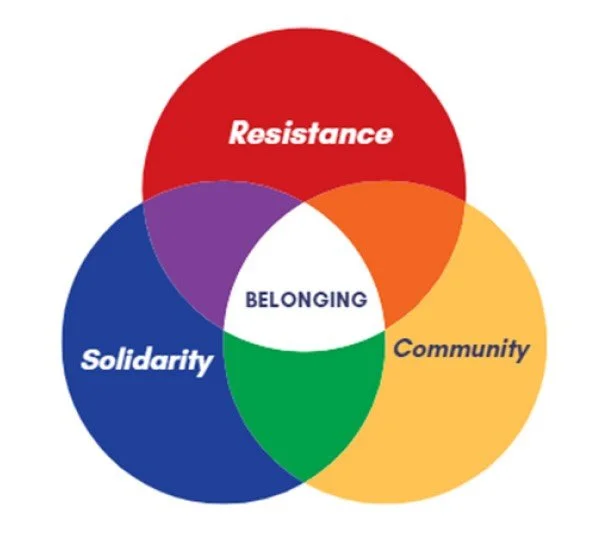
By igniting the power of football fandom FSF have also managed to empower various communities across the LCR to organise, volunteer and re-connect around the critical issues surrounding food poverty. The pantries pop up and are run like food markets with music playing and jokes being shared among volunteers and patrons. People often stay around long after they have gathered what they need.
After getting to know them over a few months some of the regulars (174) were surveyed and asked how they felt when they were there. A difficult question, so to assist, a list of emotions was offered – e.g. ‘fear’, ‘acceptance’, ‘anger’, ‘joy’, ‘shame’ – and by far the most popular choice, to my initial surprise, was ‘joy’.
Solidarity
This joyful response becomes clearer the longer you spend at the pantries and with the FSF organisers themselves. At the pantries, many of the users are lonely and desolate, having fallen foul of the cost-of-living crisis, their own health concerns and many other things that have reduced the sense of community and authentic connection across the UK.
The goal of the fans, is simply to end food insecurity, make themselves redundant and their tag line ‘hunger doesn’t wear club colours’ sums up their attitude. The movement transcends sport and rivalry, as one volunteer said to me: ‘Its fans helping each other…you think “these people are the same as us”’. The ability to spread and share solidarity is worn like a hidden badge of honour alongside club crests on their chests.
Resistance
In FSF, we see a constant and coherent anti-system social movement anchored closely to long-standing cultural institutions across the UK and Ireland with echoes of trade unionism. Through their shared values and beliefs, they have managed to raise enough funds and resources to lead a sustained resistance against food poverty and loss of dignity. This formation of social interdependence grounded in culture is antithetical to the over-riding neoliberal dogma of our time, wherein dealing with the products of inequality is the preserve of the individual.
Belonging
Indeed, while football fan culture has been invaded and distorted by the language of profit, the FSF movement is fed by a counter-discourse based around solidarity, community and collective resistance. At the centre of this sits another essential human need – to belong.
This research and my time with FSF, which is unlikely to end, has shown that the fight against food insecurity is not only about the need to eat well. It is as much about reestablishing community around food in lieu of various social institutions that have crumbled or been pounded into dust by poor governance.
For now, the FSF organisers and volunteers continue, standing sentry at their posts at the pantries and next to stadia across the UK and Ireland. They continue to build and support an emergency food system that is itself precarious. Yet like many in the food network, they do so not (only) out of a sense of pride, or moral duty, but through the knowledge that they have become too important to fail.